
Introducing KYW – Know Your Wallet
One of the hardest open problems in crypto compliance is deceptively simple: What kind of wallet are we dealing with?
Is it a custodial wallet operated by a VASP?
Is it a self-hosted wallet controlled by an individual or business?
Is there a known entity behind it?
Can we trust the attribution?
And what should a compliance team do when the answer is not obvious?
Today, we are introducing KYW – Know Your Wallet, a new wallet intelligence feature designed to help compliance teams answer these questions with greater operational confidence.
Open Partner Model for Travel Rule Compliance
Over the past year, we have been building partner integrations with companies that need to connect with CryptoSwift in different ways. Some partners serve licensed VASPs and want to offer CryptoSwift capabilities to their own customers. Others are Travel Rule networks that need to exchange data securely with CryptoSwift customers. These integrations started as specific […]
How we built the best wallet verification tool
Over the past year, we have been building our wallet verification widget from a small, focused component into a flexible self-hosted wallet verification solution. At the beginning, the goal was simple: help a user prove that they control a wallet. As usual, “simple” lasted until the first real customer use case. Then came different blockchains, […]
CryptoSwift Outpost: On-Prem Travel Rule Infrastructure for Banks and Regulated Institutions

For banks, VASPs, and other highly regulated financial institutions, the challenge is rarely just compliance. It is operationalizing compliance without creating a fragile, high-maintenance architecture around your most sensitive data. For organizations whose internal policies or regulatory interpretations require stricter control over sensitive data, this challenge becomes even more pronounced. That is the problem CryptoSwift […]
Introducing the CryptoSwift Rule Engine: Automating Travel Rule Compliance Decisions
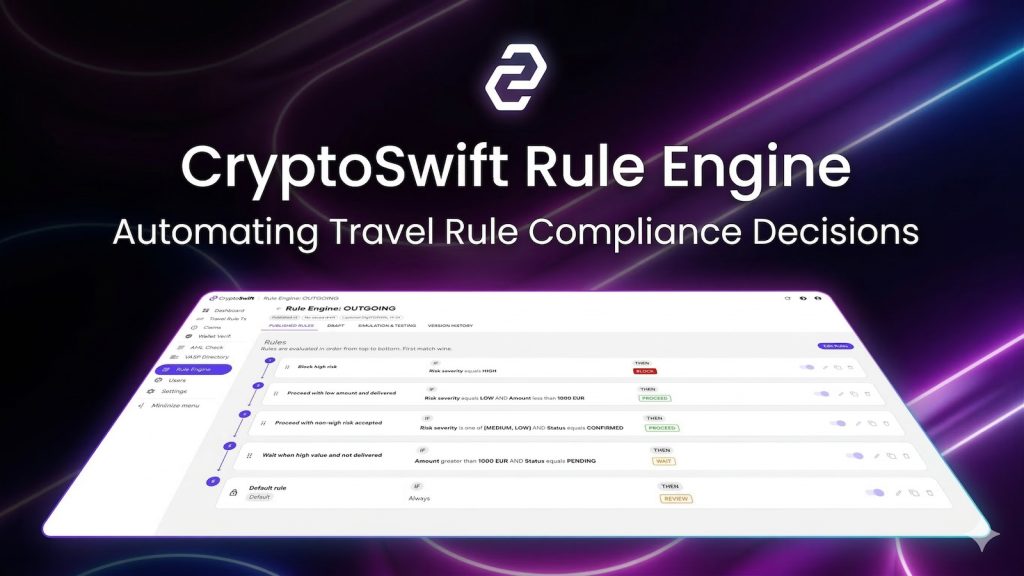
Over the past months we’ve been shipping quite a lot of new capabilities at CryptoSwift. We introduced Travel Rule risk scoring, built a global VASP directory, integrated AML checks directly into the dashboard, improved wallet verification, and completely revamped our developer portal. Each of these improvements adds valuable signals for compliance teams operating under the […]
We’ve Been Busy Building again
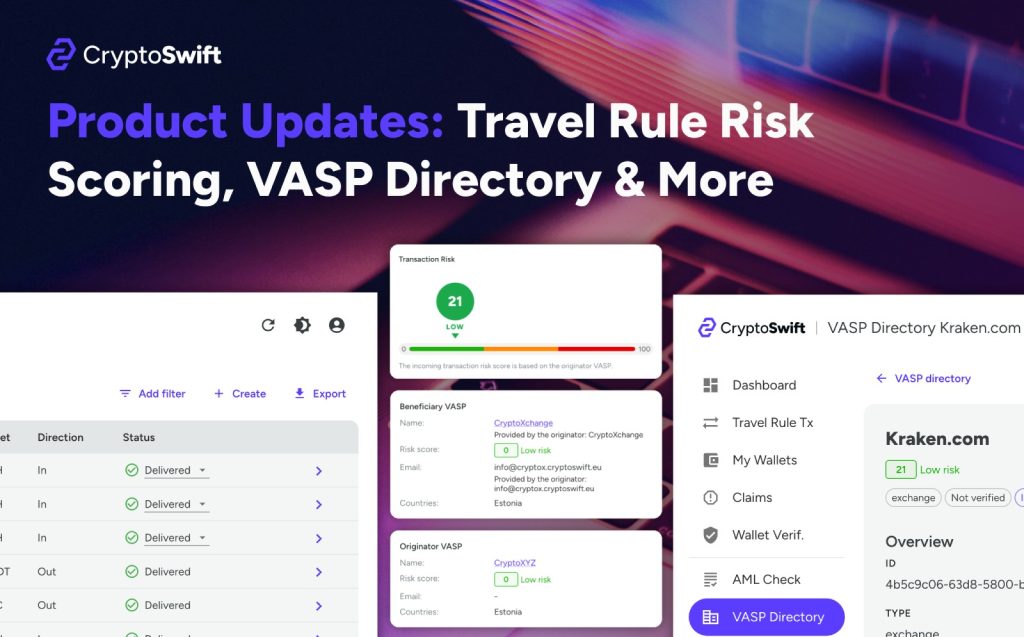
The last few months at CryptoSwift have been intense in a good way. One of the most exciting developments has been our work on improving the Travel Rule risk score. Here’s What’s New at CryptoSwift. We’ve shipped a lot. Enough that I had to think twice about whether this should be one blog post or […]
CryptoSwift Product Updates October 2025

Over the past month, we’ve been hard at work improving CryptoSwift to make Travel Rule compliance even more efficient for our customers. From a fully revamped dashboard to richer developer resources and new testing capabilities, here’s a detailed look at what’s new. A Revamped Client Dashboard We’re excited to introduce a brand-new design for the […]
What’s New in CryptoSwift: September Product Updates
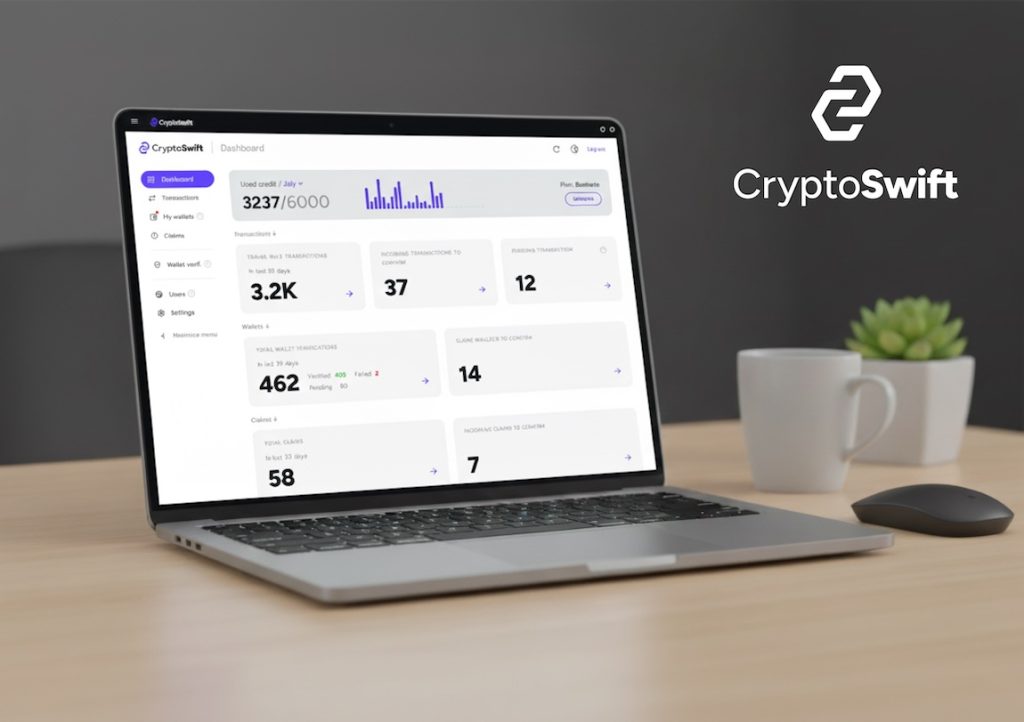
At CryptoSwift, we’re dedicated to making Travel Rule compliance easy while helping you manage crypto transactions with confidence. Over the past month, our team has been hard at work refining the platform and introducing new features, many of which came directly from your feedback. Here’s what’s new: Bulk Wallet Import Managing custodial wallets just got […]
Case Study: Fast-Track Travel Rule Integration with Striga

At CryptoSwift, we always emphasize that security and compliance don’t need to come at the cost of speed or developer experience. Recently, we had the chance to prove this point in the best possible way by working shoulder-to-shoulder with a client and integrating our Travel Rule service in real time. Our customer, Striga (now Lightspark), invited […]
Introducing the Self-Hosted Wallet Verification Widget
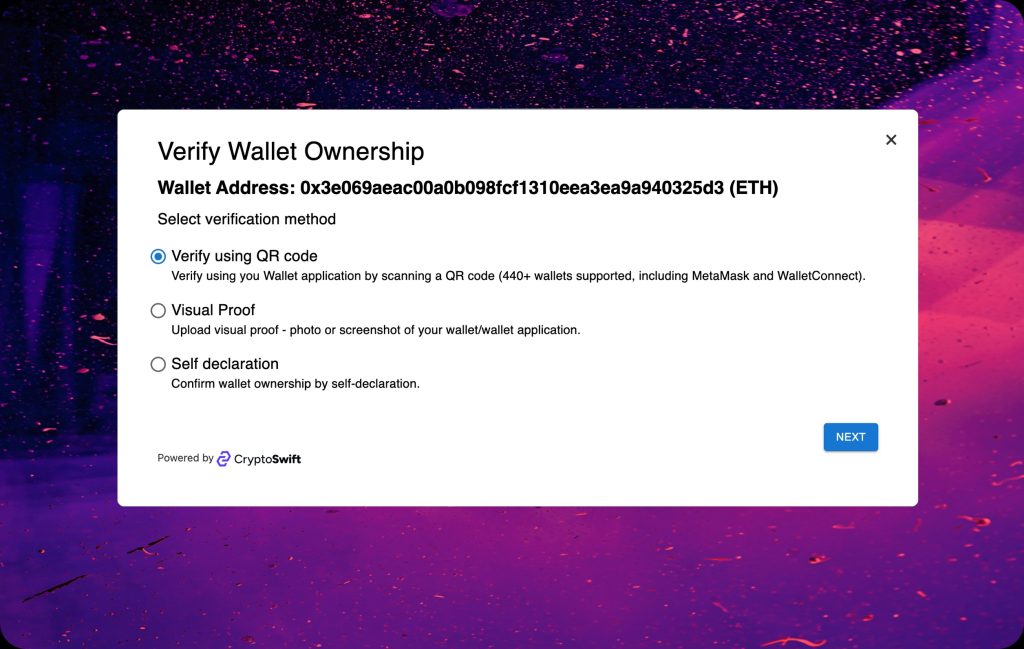
Book a demo One of the key requirements for meeting Travel Rule compliance is verifying self-hosted (or non-custodial) crypto wallets, a process known as self-hosted wallet verification. While there are solutions available, they’re often rigid and don’t cover the variety of wallets and use cases that businesses face today. We’ve seen this gap firsthand and […]